As a plastic bucket manufacturer with long-term supply to paint and coatings brands, recurring feedback from distributors and end users highlights one critical issue: closure usability. Complaints such as “too hard to mount and does not fit right” are not isolated incidents. They reflect systemic risks in lid–pail compatibility that directly affect filling efficiency, transport safety, and end-user satisfaction.
1. The Problem: Closure Usability Failures in Real Operations
In paint packaging, lids are opened and resealed far more frequently than in food or chemical applications. When closures are difficult to fit or remove, the impact is immediate.
Typical operational scenarios
- Workers struggle to press lids evenly on the filling line
- Screw lids bind or cross-thread during resealing
- Reused pails fail to seal properly after the first opening
Buyer impact
- Slower filling and packing cycles
- Inconsistent resealing during multi-day paint use
- Higher spill and leakage risk during secondary transport
What users say
“Too hard to mount and does not fit right.”
2. Root Causes: Why Paint Bucket Lids Fail in Practice
From a manufacturing and quality-control standpoint, closure complaints almost always trace back to three root causes:
(1) Dimensional tolerance mismatch
Paint pails are often sourced from one factory and lids from another. Even a 0.5–0.8 mm deviation in bead diameter or lid groove depth can cause excessive mounting force or loose sealing.
(2) Material rigidity imbalance
Overly rigid PP or HDPE lids resist deformation, making snap-fit engagement difficult—especially in cold environments where plastic stiffness increases.
(3) Inconsistent mold wear control
High-cycle lid molds without regular cavity recalibration lead to uneven shrinkage, resulting in lids that “fit some pails but not others.”
3. The Solution: Engineering Closures for Real Paint Use
At Enlightening Plast plastic bucket manufacturing operations, closure usability is treated as a system, not an accessory.
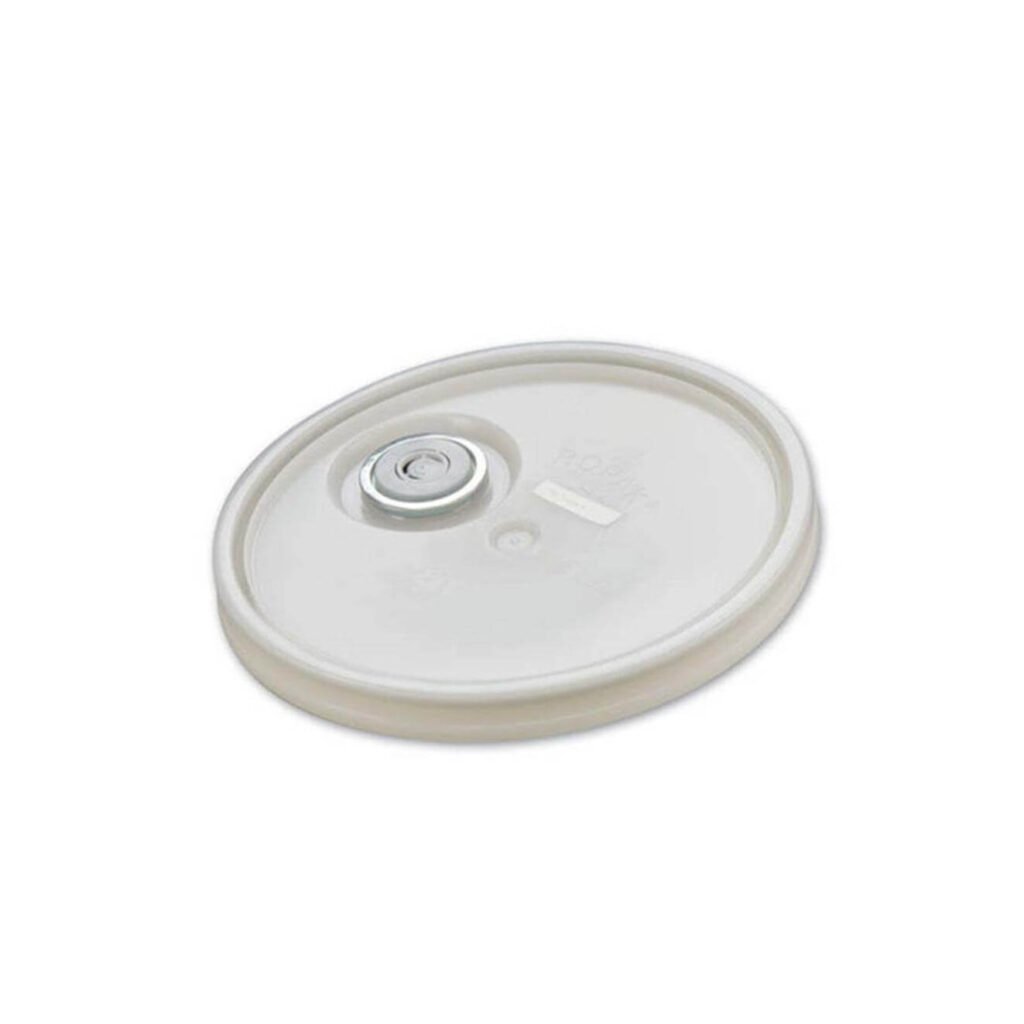
(A) Controlled tolerance design
- Lid and pail are developed as a matched set
- Critical snap-bead and groove tolerances controlled within ±0.3 mm
- Regular mold validation every 80,000–100,000 cycles
(B) Progressive-fit sealing geometry
Instead of a single hard snap, lids use a progressive engagement profile, allowing gradual compression during mounting.
Result: lower mounting force while maintaining airtight sealing.
(C) Material elasticity tuning
By adjusting HDPE/PP blend ratios, lid flexibility is optimized to:
- Reduce mounting force by 25–35%
- Maintain seal integrity after 10+ open–close cycles
4. Data Support: Measurable Results from Production & Field Use
- Mounting force reduction
Internal line tests show average lid mounting force reduced from 42 kg to 28 kg, improving filling speed by 18%. - Leakage rate improvement
Drop and tilt tests show leakage incidents reduced by over 60% after tolerance-matched lid–pail redesign. - Customer complaint reduction
After switching to matched closure systems, distributor-reported “lid fit” complaints dropped by more than 70% within 6 months.
5. Case Example: Mid-Size Paint Brand Optimization
Background
A regional coatings brand experienced frequent complaints about lids being “too tight” and inconsistent across batches.
Action taken
- Replaced mixed-supplier lids with a unified pail–lid system
- Introduced progressive-fit snap lids with calibrated bead depth
- Added in-line lid fit inspection during filling
Outcome
- Filling line speed increased by 15%
- Transport leakage claims have been reduced to near zero
- Improved distributor confidence in reusable pail performance
Final Takeaway for Buyers
Closure usability is not a cosmetic issue—it is an operational risk factor. For paint packaging, reliable resealing, easy mounting, and consistent fit must be engineered at the manufacturing stage.
Working with a plastic bucket manufacturer that controls pail, lid, material, and mold precision as one system is the most effective way to eliminate closure complaints before they reach the market.
For paint brands, distributors, and packaging managers, this approach directly translates into:
- Faster operations
- Lower spill risk
- Stronger end-user trust